
How to Apply for Western Australia Skilled Nomination: EOI, Invitation and Visa Process
How to Apply for Western Australia Skilled Nomination: EOI, Invitation and Visa Process
The Western Australian (WA) State Nominated Migration Program provides eligible skilled workers with a pathway to Australian permanent or provisional residency through the Skilled Nominated Visa (Subclass 190) and the Skilled Work Regional (Provisional) Visa (Subclass 491).
This guide explains the complete WA skilled nomination process, from submitting an Expression of Interest (EOI) to receiving an invitation and applying for your visa.
How the WA Nomination Process Works
Step 1: Check Your Visa Eligibility
Before submitting your Expression of Interest (EOI), ensure you meet the basic eligibility requirements for your preferred skilled visa.
Basic Requirements
- Age requirements
- English language proficiency
- Suitable skills assessment
- Eligible skilled occupation
- Minimum points test requirement
- Health and character requirements
Step 2: Check Western Australia’s Nomination Criteria
Review the latest WA State Nominated Migration Program requirements before submitting your application.
You should confirm:
- Whether your occupation is currently eligible
- Whether it is available under Subclass 190, Subclass 491, or both
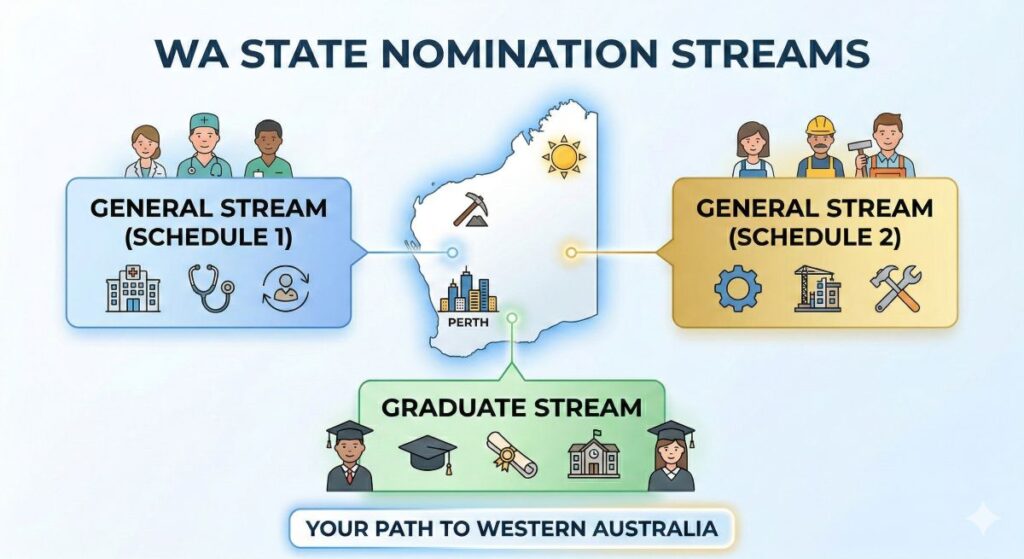
- Whether you qualify under the General Stream or Graduate Stream
- WA employment or work experience requirements
- WA study requirements
- Current occupation priorities and program updates
Step 3: Submit or Update Your SkillSelect EOI
Applicants seeking WA nomination must generally submit an Expression of Interest (EOI) through the Australian Government’s SkillSelect system.
Your EOI should include:
- Nominated occupation
- Preferred visa subclass
- Skills assessment details
- English language test results
- Employment history
- Educational qualifications
- Points claims
- Partner-related points (if applicable)
Step 4: Wait for a WA Invitation
WA Migration Services reviews eligible EOIs and invites selected candidates to apply for state nomination.
Invitation decisions are based on:
- Available nomination places
- Occupation priorities
- Program settings
- Eligibility stream
- Competitiveness of EOIs
Step 5: Apply for WA State Nomination
If invited, applicants must submit their WA nomination application together with supporting documents.
Documents commonly required:
- Passport
- Skills assessment
- English language test results
- Academic certificates and transcripts
- Employment reference letters
- Payslips or employment evidence
- WA study evidence (if applicable)
- Partner documents (if applicable)
Step 6: Apply for Your Skilled Visa
Once WA approves your nomination, it is recorded in SkillSelect and you may proceed with your visa application after receiving an invitation from the Department of Home Affairs.
WA Subclass 190 vs Subclass 491
| Visa | Description |
|---|---|
| Subclass 190 | Permanent skilled visa for applicants nominated by an Australian State or Territory. |
| Subclass 491 | Provisional regional skilled visa with a potential pathway to permanent residence. |
Your suitable visa depends on your occupation, points score, employment, study history, and long-term migration plans.
General Stream vs Graduate Stream
General Stream
Designed for eligible skilled workers whose occupations appear on the WA skilled occupation list.
Graduate Stream
Available to eligible international graduates who have completed approved studies in Western Australia.
Eligibility depends on occupation, qualifications, employment history, work experience, and WA study requirements.
Common Mistakes to Avoid
- Searching for a separate WA ROI instead of submitting a SkillSelect EOI
- Keeping outdated information in the EOI
- Claiming unsupported points
- Selecting an occupation that is not currently eligible
- Choosing the wrong visa subclass
- Misunderstanding the General and Graduate Streams
- Missing the nomination application deadline
- Assuming nomination guarantees visa approval
Documents to Prepare in Advance
Applicants should prepare supporting documents early because invitations usually require a response within a limited timeframe.
- Valid passport
- Skills assessment
- English language test results
- Academic certificates
- Academic transcripts
- Employment evidence
- SkillSelect EOI details
- WA employment or study evidence (if applicable)
- Partner documents (if claiming partner points)
Key Takeaway
For most applicants, the WA skilled nomination process does not require submitting a separate ROI. Instead, candidates should create or update their SkillSelect Expression of Interest (EOI), ensure they meet Western Australia’s nomination requirements, and wait for an invitation from WA Migration Services.
If invited, applicants must submit their state nomination application with supporting evidence. After receiving nomination approval, they can proceed with the relevant skilled visa application through the Australian Department of Home Affairs.
Disclaimer: This article is provided for general information purposes only and should not be considered migration or legal advice. Applicants should verify the latest requirements with the Western Australian Government and the Australian Department of Home Affairs or consult a registered migration professional.

